


How do you build a DJ set? Track selection and energy
Mixing two tracks together is one thing.
Knowing what to play for thirty minutes, an hour or longer is another.
This is often where a beginner discovers that mixing technique is only part of the job. You can match two tracks perfectly and still stare at your library wondering: what do I play now?
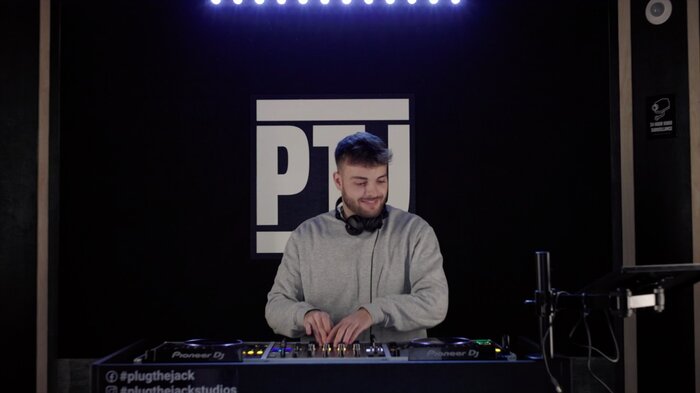
Building a DJ set means choosing tracks that can work together, giving them a direction and managing energy well enough that your set does not feel like a random sequence of songs you like.
And contrary to what you might expect, a good set does not need to keep increasing in energy all the time.
If the fundamentals are not clear yet, start with How do you learn to DJ?.
Start with context: where and for whom are you playing?
A recorded set at home does not have the same purpose as a set in front of a crowd.
An opening set has a different role from playing when the dancefloor is already full. Thirty minutes to introduce your sound works differently from three hours in which you help shape an entire night.
Context affects your starting energy, the styles you can explore, how quickly the set evolves, how much music you prepare and how much freedom you need.
DJs such as Armin van Buuren have often stressed two simple dimensions: track selection and reading the crowd.
So start with one question: what role is this set meant to play?
Build a selection first, not a final setlist
Gather tracks that can live in the same musical universe.
They do not need exactly the same BPM, key or subgenre. There simply needs to be a musical reason for them to belong together: colour, energy, groove, atmosphere, era or your own taste.
Prepare more tracks than you expect to play. For a one-hour set, you want alternatives.
A track that seemed perfect during preparation may feel completely wrong once you actually reach that point in the set.
BPM does not tell you how much energy a track has
Two tracks at 128 BPM can feel completely different.
One may be minimal and spacious. Another may be packed with kick, bass, vocals and tension.
BPM mainly tells you speed. It does not measure energy.
You can roughly think of tracks as calm, medium, energetic or very energetic.
The important distinction is between “this track is faster” and “this track genuinely increases the energy”.
A good set does not have to climb in a straight line
It is tempting to put all your biggest tracks one after another.
But when everything is at maximum intensity, the peak moments lose their contrast.
A set can move more like a wave: build → strong moment → breathing space → new direction → another build.
Reducing energy slightly does not automatically mean losing the crowd. It can make the next strong track feel much bigger.
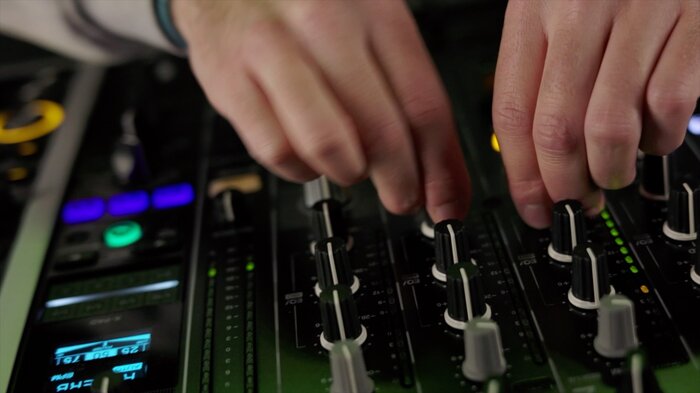
Think in blocks rather than thirty fixed positions
You can group tracks mentally into a beginning, first build, stronger section, breathing space or different colour, and another progression.
The point is not the exact structure. It is having several options at every stage.
Instead of asking “what must track number 17 be?”, ask “which three or four tracks could work now?”.
That flexibility is much more useful in front of a crowd.
Should you prepare the exact order of a DJ set?
It depends on the type of set.
For a recorded mix, a precise order can be very useful. You know the duration, can test several versions and prepare specific transitions.
In front of a crowd, the situation changes. Richie Hawtin, for example, has often described DJing as a question of timing and responding to the moment, the room and the sound system.
For a live set, it is often better to prepare a direction, a few important tracks, several groups of compatible options, perhaps a starting idea and enough alternatives.
Prepare possibilities, not a route you cannot leave.
Knowing your tracks matters more than memorising your playlist
The better you know your music, the easier it is to change direction.
You know which track has a long intro, starts hard, contains a recognisable vocal, creates breathing space or ends in a way that lets you move somewhere else.
BPM, key, waveform and tags are useful. They do not replace knowing the track.
Two tracks can be technically compatible and make no musical sense next to each other.
The real question is: does this track make sense now?
How do you choose the next track?
Ask whether you want to maintain the current energy, raise it, let the set breathe, introduce a different colour or bring in something genuinely new.
With experience, those questions become instinctive.
But one principle remains: the next track should have a function. Being technically compatible is not enough.

Let tracks do their job
Beginners sometimes feel the need to constantly prove they are mixing. A track has barely arrived and the next transition has already started.
But some tracks need time. A drop needs room to land. A vocal may deserve to be heard. Tension may need several phrases to work.
Mixing more does not automatically mean mixing better.
Sometimes the best decision behind the decks is: do nothing for a moment.
Think about your beginning and your ending
The first track sets an atmosphere, intention and starting energy. It does not have to be your most powerful track.
If you begin at maximum intensity, you leave yourself less room to build.
The final track can also have a purpose: finish high, go emotional, surprise the room, change colour or make a clean handover to the next DJ.
A set can have a real ending. It does not need to stop simply because your hour is over.
Test your set, then be willing to change it
Build a selection and play it.
Record it if you are preparing something specific, then listen back. You may discover an accidental drop in energy, three tracks that are too similar or a surprisingly strong contrast.
Change something and play it again.
Building a DJ set is often an editing process.
If you want to test the set at real volume in a club-like environment, you can practise it in a DJ studio with CDJ-3000s and a DJM.
You do not need to tell a complicated “story”
You often hear that a good DJ set should tell a story. It is a nice idea, but it can intimidate a beginner.
A simple direction is enough: start groovy, gradually build energy, create a first strong moment, let the set breathe and build again.
That is already a story.
A DJ set is a map, not a playlist
A playlist is already decided. A DJ set can change while it is happening.
You know your music, have enough tracks prepared and roughly know where you want to go. Then the venue, time, crowd and your own feeling can take you somewhere else.
That is exactly what makes DJing different from an automatic playlist.
You do not only choose which tracks will play. You decide when they should arrive.
Preparing your first club set? Read From controller to CDJs: what really changes?.
