


How Do You Record Your First Song?
For the past few years, I’ve regularly seen people walk into a recording studio for the first time.
And if you know nothing about recording, a studio can be quite intimidating.
There are speakers you may not have at home, professional microphones, an audio interface, cables and headphones. On your own computer, you still need to open software you may never have used before.
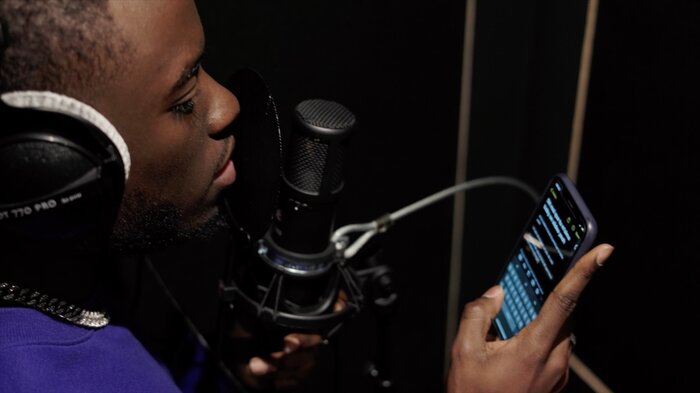
All of that can make recording a song feel like something only specialists can do.
As if you first need to know a sound engineer, have a friend who makes beats, or understand a whole list of technical things before you can even start.
It reminds me of something I see with many people when they discover professional music equipment for the first time: it is very easy to think you are not experienced enough to be there yet.
Yet I have helped several people who had never recorded anything before. What strikes me is how quickly that feeling of complexity disappears once someone simply explains what is happening.
Within fifteen or twenty minutes, you can already understand how to record a voice.
And within one or two hours, you can realistically have imported an instrumental, recorded several takes and started building your first song.
That obviously does not make you a sound engineer in two hours.
But getting started is much simpler than it looks.
A studio is ultimately a fairly simple chain
The first thing I usually explain is not how a particular piece of software works.
I explain the path the sound is going to follow.
At the beginning, there is an audio source.
That can be a voice, a guitar, an acoustic instrument or almost anything that produces a sound you want to record.
That sound then needs to be captured. For a voice, that will usually be a microphone.
The microphone turns what it captures into an electrical signal. That signal travels through a cable to an audio interface, sometimes also referred to as a sound card.
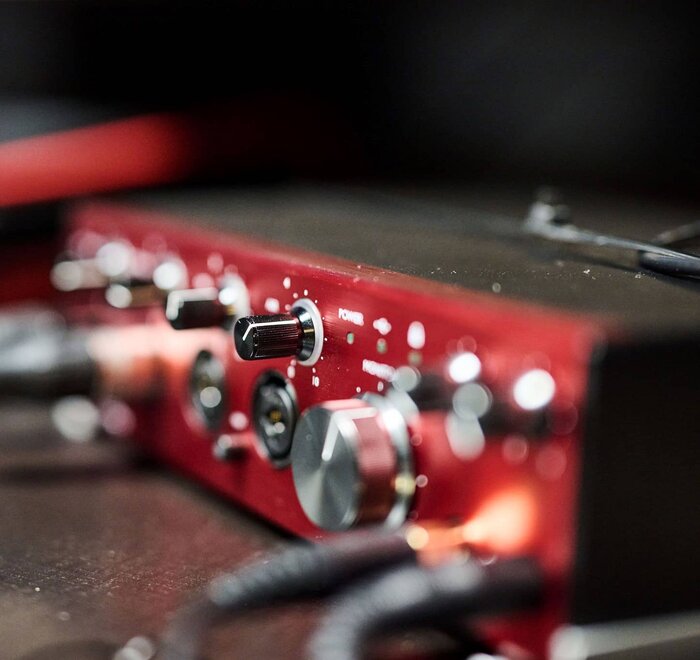
The audio interface plays a central role: it receives the microphone signal, provides the necessary amplification and converts the signal so the computer can record and process it.
Finally, software on the computer receives that signal and records it.
The path can therefore be summed up very simply:
your voice → the microphone → the audio interface → the computer → the software.
When you want to listen back, the sound travels back out to your headphones or speakers.
Once you understand that loop, a large part of the mystery of a recording studio disappears.
The DAW: simply where your song takes shape
The name itself can sound intimidating: DAW, short for Digital Audio Workstation.
In practice, it is simply the software where you record, organise and gradually build your song.
Most of these programs are based on a fairly easy idea to understand: tracks.
Take a very simple example.
You rap or sing and you already have an instrumental.
You import that instrumental into the software. It appears on the first track.
Then you create a second track for your voice.
You put on your headphones so the instrumental does not feed back into the microphone. You select the input your microphone is connected to and start recording.
The music plays in your headphones while your voice is recorded on its own track.
You stop.
You listen back.
And that is it: you have already recorded the first elements of your song.
Modern production software can obviously do infinitely more than this. But you do not need to understand everything it can do before recording your first few seconds of music.
Which software should you start with?
This is another question that can unnecessarily stop beginners from getting started.
There are many programs: Ableton Live, FL Studio, Logic Pro, Cubase, REAPER and plenty of others. Each has its own interface, habits and way of working.
But your choice for a first recording does not have to be permanent.
Audacity, for example, can be a very simple way to understand the basic idea of multitrack recording: create a track, choose an input, record, listen back and begin editing what you have just recorded.
If you use a Mac, GarageBand already lets you go further into music creation with audio tracks, virtual instruments, loops and effects.
BandLab offers another accessible starting point from a web browser or mobile device, allowing you to import audio and record different tracks.
If you later want to explore a more complete production environment, you can move on to software such as Ableton Live, FL Studio, Logic Pro, Cubase or REAPER.
These are not recommendations intended to declare one program the “best”.
At the beginning, what matters more is choosing one and learning a few basic actions: create a track, choose an input, record, stop, listen back and save your project.
Once you understand that logic, opening another DAW becomes much less intimidating.
Your first song can start with two tracks
I think it is important to come back to this simplicity, because it is very easy to watch producers working with dozens of tracks, plugins, effects and screens filled with parameters.
That is not where you need to start.
One instrumental.
One vocal track.
Headphones.
Record.
You do a first take.
Then a second.
Then perhaps a third because one section was better in the first take and another worked better in the second.
After one or two hours, someone who had never recorded before can already have several vocal takes over a piece of music.
It may not yet be the song they imagined.
But there is now something to work on.
And, more importantly, they have understood that they are capable of doing it.
Recording is only the first step
Once you know how to record, a second stage arrives quite naturally: editing.
You may have recorded the same section three times.
One take starts better. Another contains a stronger line. A third has more energy.
You then learn how to cut a track, remove what you do not want to keep, move something or combine parts from different takes.
Again, just a few functions can already take you a very long way compared with where you started.
Then a third dimension gradually appears: production and mixing.
You start by adjusting levels.
Then you discover that some sounds can be positioned differently in the stereo field. You begin to hear frequencies competing with each other. You discover EQ, compression, reverb and other effects.
And that is where the journey becomes much longer.
But also much more interesting.
Getting started is easy. Mixing well takes experience.
So we should be careful with the idea that someone can learn to produce a song perfectly in two hours.
That is not what I mean.
In two hours, a beginner can genuinely record something.
They can put an instrumental and a voice together, roughly balance their levels and create a first version that is clear enough to hear the song and understand where it might go.
You can think of it as a rough mix: a first working version.
Creating an excellent mix is something else.
With experience, you discover that the different elements of a song cannot simply be stacked on top of one another.
They occupy space.
Some elements can be positioned differently in the stereo field. Frequencies can compete. A vocal may need dynamic control. Reverb can create depth and, when used badly, make the exact same song feel confused.
Technique can be learned.
But more importantly, your ears develop.
Over time, you start hearing things you would not even have noticed a few months or years earlier.
A little like learning to cook
I think music production has something in common with cooking.
In a family kitchen and in a Michelin-starred restaurant, you may sometimes start with fairly similar ingredients.
What changes is what you have learned to do with them.
An experienced cook gradually understands how flavours interact, how cooking transforms an ingredient, how a sauce becomes balanced or how one texture can complement another.
Audio is quite similar.
The microphone, the tracks, the EQ and the compressor are tools.
But knowing when to use them, how much to use and, above all, why, takes experience and listening.
That does not stop you from cooking your first meal.
And it certainly does not stop you from recording your first song.
Starting is precisely what makes learning possible.
Is a home studio really the easiest way to start?
When people talk about recording and music production today, the home studio often seems like the obvious starting point.
And it is an excellent way to work.
With a computer, an audio interface, a microphone, headphones and software, you can do an enormous amount at home.
But for someone who is genuinely starting from zero, there is a paradox.
Before you even record your first vocal, you need to choose an audio interface.
Choose a microphone.
Work out what you need to buy.
Find the right cables.
Install everything.
Configure your software.
Find somewhere suitable to record.
And often work out why something does not work when you connect it for the first time.
A home studio can therefore become an extremely simple solution once you know what you need.
It is not necessarily the simplest starting point when you have never seen a recording chain work before.

For a beginner, an equipped studio can sometimes be simpler
This is something I have learned from watching people use Plug The Jack.
It is easy to imagine the recording studio as the professional step that comes later.
But a studio designed to be simple and plug and play can actually remove many of the difficulties that come at the beginning.
The microphone is there.
The audio interface is there.
The headphones and speakers are there.
The cables are already connected.
In our recording and production studios, the computer remains the artist’s own: you bring your laptop, your software and your projects. The studio provides the environment and the audio chain already set up around it.
That changes the order in which you discover things.
Instead of starting with:
“What do I need to buy?”
you can start with:
“How do I record something?”
After a few sessions, buying a small audio interface or microphone to continue working at home can make much more sense, because you finally know what you are buying and what you need it for.
A home studio and an equipped studio do not therefore have to be competing solutions.
They can easily be part of the same journey.
It also connects with something I wrote about in what really makes a good music studio: a good environment removes some of the friction between wanting to make music and actually doing it.
Two hours to understand it. Much longer to learn it.
I like that distinction.
Within a few dozen minutes, someone can understand the path the sound follows.
Within one or two hours, they can import an instrumental, record several takes and begin editing their song.
Then come dozens and eventually hundreds of hours in which they gradually discover everything else.
Recording.
Editing.
Production.
Mixing.
Effects.
Listening.
Mistakes.
And that part is not an obstacle we should try to remove.
It is also what makes music fascinating.
You open a song again a few days later and hear something you did not hear before.
You change a vocal.
You remove an effect.
You move a sound.
You try again.
And little by little, the song gets closer to what you had in your head.
Making music also means giving yourself that time
There is one final thing that matters to me and goes well beyond choosing a microphone or a piece of software.
Working on a song takes time.
Not necessarily a huge amount of time in each session.
But time in which you listen, experiment, start again and focus on something that belongs to you.
That can happen at home.
It can happen in a studio.
What matters is creating the conditions to actually get started.
And as you learn, the journey becomes rewarding.
If recording, producing and mixing a song perfectly were immediate, we would probably be far less proud of the result.
You do not need to know how to produce before you start
I think many people wait until they feel knowledgeable enough before opening their first project.
That is probably the wrong way around.
You do not need to know every DAW.
You do not need to understand compression.
You do not need to know how to mix.
You do not even need to know exactly what equipment you may one day buy for your home studio.
To start, you only need to understand a few things:
a sound, a microphone, an audio interface, a track and a Record button.
The rest comes gradually.
Because you do not start recording once you already know how to produce music.
By recording your first songs, you begin learning how to produce them.
Damien
Founder of Plug The Jack
